Stop searching
the same place.
Find overlooked family-history records, learn who holds them, and plan your next research step. Use practical guides and document examples to separate a promising clue from a supported conclusion.
Where is your research stuck?
Choose the gap in your story.
We’ll point you toward a place to look.
“Their name isn’t there.”
Look beyond indexed records.
Start with the FamilySearch Catalog.
“Who were their people?”
Follow heirs, guardians and witnesses.
Open probate records.
“Where did they go?”
Trace a place and its neighbors.
Follow land and property records.
“What was their life like?”
Find the story between the milestones.
Read the local newspapers.
Start with who kept the record.
I’m Jeremy VanMeter. Ten years of municipal clerk experience shape how I approach family history: who created a record, why it exists, and where it might be kept. Here, I turn that perspective into practical research steps.
A name search missed these records.
A 1926 Ohio fence dispute reveals names, addresses, and neighboring property in township minutes.
Find a collection worth opening.
Explore 485 county guides covering every county in Ohio, Indiana, Kentucky, Illinois and Michigan, plus Philippines, Volga German and Jewish genealogy starting guides. Find selected collections, practical access notes and questions to ask before requesting a record. Sources and unresolved access details are identified in each guide.
Keep your research
ready to continue.
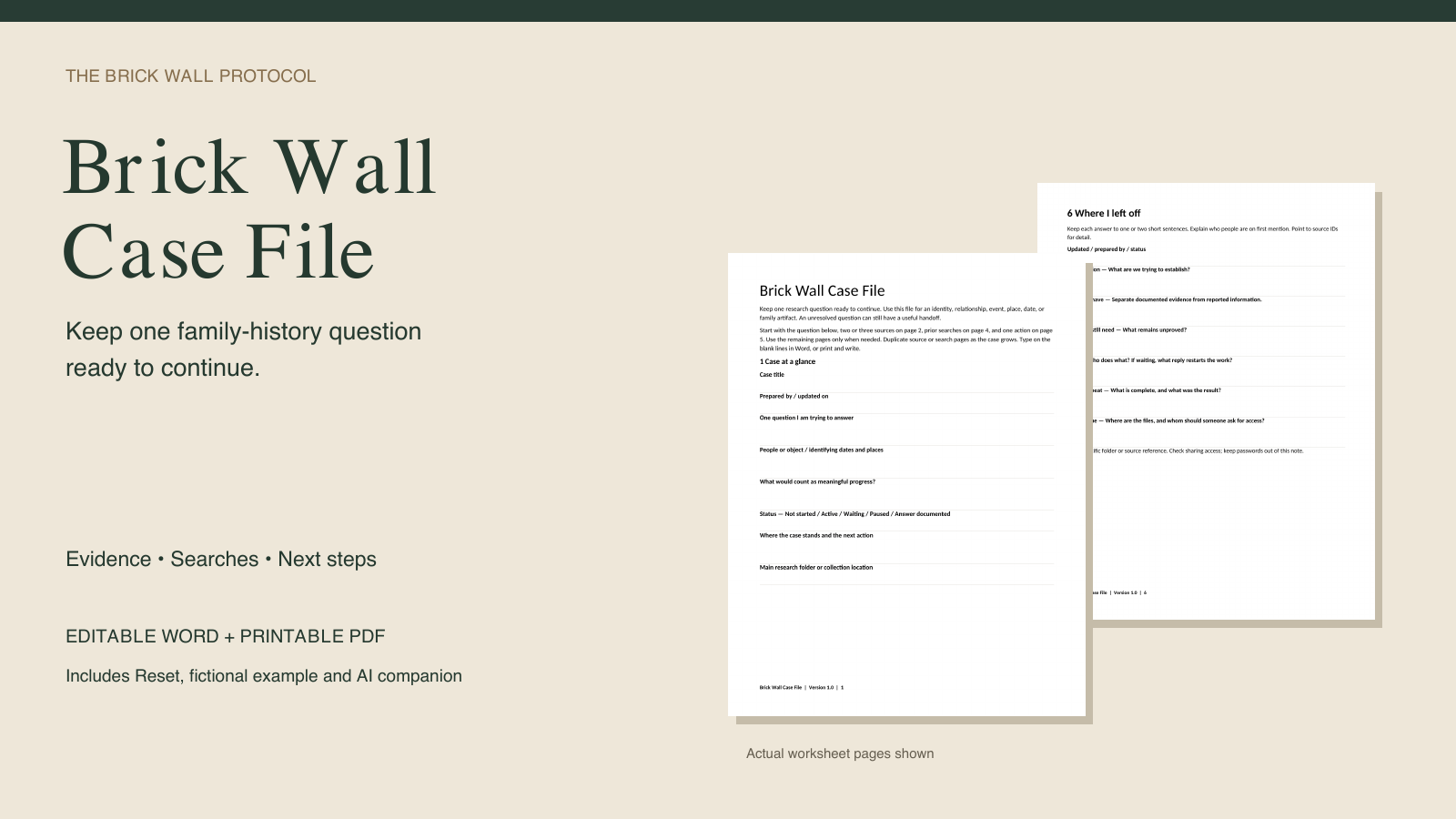
When a family-history question takes months or years to answer, keep track of what you found, what remains uncertain, and what to try next.
Editable Word worksheets, printable PDFs, a fictional worked example, and an optional AI companion. Use it for any family line.
One-time purchase through Gumroad or Etsy. Applicable taxes may be added. The repository guides above remain free.